How Does Solar Heating System Work
Solar energy is transforming how households heat water efficiently. If you've ever wondered how does solar heating system work, this guide will explain everything—from solar water heaters and solar geysers for home use to the mechanics of heating water with solar technology. Solar systems for water heating not only reduce energy bills but also contribute to a greener environment.
By understanding how a solar water heater works, homeowners can choose the right system, maximize savings, and enjoy reliable hot water year-round.
How Solar Water Heating Systems Work
A solar power water heating system captures sunlight and converts it into usable heat for household water.
Here is a concise overview of the process:
- Step 1: Solar collectors absorb sunlight.
- Step 2: Heat-transfer fluid circulates through the collectors.
- Step 3: Heat is transferred to water via a heat exchanger, warming your tank.
A differential controller automates this process by starting circulation when the collector is hotter than the tank.
According to the U.S. Department of Energy, solar water heaters can provide 50–80% of a household’s annual hot water needs, significantly reducing reliance on electricity or gas.
Homeowners can also benefit from a 30% federal tax credit available through 2032, making the payback period for a solar system for water heating roughly 5–10 years, depending on system size and energy consumption.
Key Takeaways
- Efficiency: Thermal solar water heaters achieve 60–75% efficiency vs 15–20% for electric heaters.
- System Types & Costs: Active (pumped) systems $2,300–$6,000, passive (gravity) systems $1,000–$3,700.
- Savings Data: Can cut energy bills by 50–80% annually.
- Tax Credit: 30% federal credit reduces upfront costs.
- Lifespan: Systems typically last 15–20 years.
Seasonal Performance: 70–90% coverage in summer; 20–40% in northern winters.
What Is a Solar Water Heater?
What are solar heaters? A solar water geyser or solar water heater is a device that uses sunlight to heat household water. Unlike conventional water heaters that rely on gas or electric energy, solar water heaters use thermal technology to capture and transfer heat directly from the sun. They are highly efficient for daily use, cost-effective, and reduce the environmental impact of heating water.
Solar Thermal vs. Solar Photovoltaic (PV)
Solar thermal systems heat water directly and achieve 60–75% efficiency. Solar PV systems, which generate electricity to power electric heaters, only achieve 15–20% efficiency for water heating.
- Solar Thermal: Cost-effective for water heating, $3,000–$9,000.
- Solar PV: $5,000–$15,000 for equivalent water heating capacity, better for whole-home electricity.
Choose solar thermal if the main goal is hot water. Opt for solar PV if you want an all-electric home solution.
The Complete Components of a Solar Water Heating System
A solar water heating system has 3–6 main components, depending on type. Active systems include pumps, controllers, and heat exchangers, while passive systems rely on natural circulation.
Solar Collectors
Three types dominate the residential market:
- Flat-Plate Collectors: Copper or aluminum absorber in insulated glass box, 60–75% efficient, $600–$1,500 each. Most common.
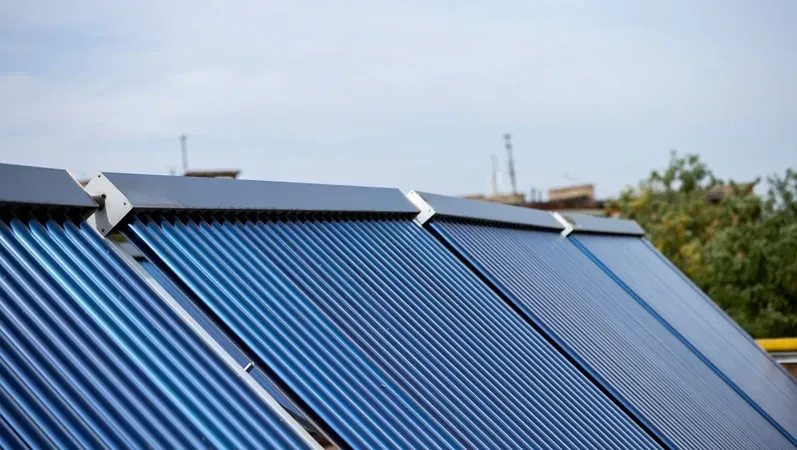
- Evacuated Tube Collectors: Vacuum-insulated tubes, 70–85% efficient, work down to -40°C, $1,200–$4,500. Premium choice.
- Unglazed Collectors: Mainly for pools, lower cost, minimal focus.
Sizing rule: 1–1.5 sq ft collector per gallon tank (north) or 1.5–2 sq ft (south). Typical home: 40–80 sq ft collector area.
Storage Tank
Solar storage tanks differ from conventional tanks: thicker insulation (R-12–R-16), extra ports for the solar loop, and double-wall construction.
- Sizing: 1–1.5 gal per sq ft collector (north) or 1.5–2 gal (south).
- Typical range: 40–120 gallons.
- Backup heating element included for cloudy days.
- Cost: $1,000–$2,800.
Heat Exchanger, Pumps, and Controllers (Active Systems Only)
Active systems include:
- Heat exchanger: Transfers heat from glycol to household water.
- Circulation pump: Moves fluid through collectors when activated.
- Differential controller: Starts pump when collector is 8–10°C warmer than tank.
- Expansion tank & valves: Ensure system safety.
Combined cost: $500–$1,500.
How Solar Water Heaters Work: Step-by-Step Operation
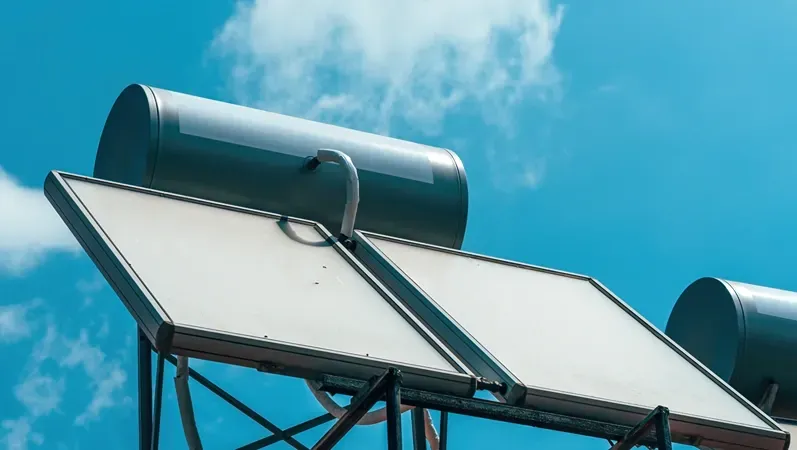
Let’s walk through a 24-hour cycle of a solar powered water heater, using an active closed-loop system as an example.
Morning: System Activation
- Sunlight hits collectors; absorber heats.
- Temperature sensor reads rising temperature (60–80°C).
- Differential controller detects 8–10°C difference vs tank; activates pump.
- Glycol circulates through collectors, absorbing heat.
- Hot glycol (60–70°C) flows to the heat exchanger.
Midday: Peak Operation and Heat Transfer
- Hot glycol enters heat exchanger.
- Heat transfers to household water via conduction.
- Cooled glycol returns to collectors.
- Tank water temperature rises from 10–15°C to 50–70°C.
- Pump runs 6–10 hours on sunny days, maintaining continuous circulation.
Evening/Cloudy Periods: Backup Heater Activation
- Collectors cool below tank temperature.
- Controller shuts off pump to prevent heat loss.
- Household uses stored hot water; insulation maintains temperature 12–24 hours.
- Backup heater activates if tank drops below 50–55°C.
- Backup only supplements solar heat, reducing energy use vs conventional systems.
Types of Solar Water Heating Systems and How They Work
Two main categories exist: active (pumped) and passive (gravity-driven). Active systems work in all climates but cost more. Passive systems are cheaper but suited for warm climates.
Active Solar Water Heating Systems — Pumped Circulation
Active systems use pumps and include:
- Direct circulation: Pumps household water through collectors, warm climates only.
- Indirect circulation: Pumps glycol through collectors and heat exchanger, freeze-proof to -40°C, most common.
- Drain-back systems: Drains water when pump is off; avoids antifreeze.
Cost: $2,300–$6,000. Pump electricity: $20–$50/year.
Passive Solar Water Heating Systems — Gravity-Driven Circulation
Passive systems rely on natural convection:
- Integral collector-storage (ICS/batch): Water stored in collector, preheats tank water, cheapest $1,000–$2,000, heavy, freeze-prone.
- Thermosyphon: Collector heats water, rises into elevated tank, efficient but tank must be above collector, 30–40% of hot water needs. Cost: $1,000–$3,700.
Table 1: Active vs Passive Systems — Complete Comparison
| Factor | Active (Pumped) | Passive (Gravity) |
|---|---|---|
| Total Installed Cost | $3,300–$9,000 | $1,500–$5,200 |
| After 30% Tax Credit | $2,310–$6,300 | $1,050–$3,640 |
| Climate Suitability | All climates (freeze-proof) | Warm climates only |
| Annual Coverage | 60–80% of hot water needs | 30–40% of needs |
| Efficiency | 70–85% | 50–60% |
| Electricity Needed | Yes (pump: $20–$50/yr) | No |
| Maintenance | Moderate | Low |
| Lifespan | 15–20 yrs (pump 10–15) | 20+ years |
| Best For | Cold climates, max savings | Budget, warm climates |
Solar Collector Types: Which Is Right for Your Climate?
Collector choice impacts both performance and cost.
Three main types:
1. Flat-Plate Collectors
Most common residential type. Dark absorber plate with welded tubes, insulated box, tempered glass. Efficiency: 60–75%. Cost: $600–$1,500. Best for sunny climates like California or Florida. Proven 20+ year durability.
2. Evacuated Tube Collectors
Premium, vacuum-insulated tubes, 70–85% efficient. Operates down to -40°C, maintains efficiency in diffuse light. Cost: $1,200–$4,500. Best for northern climates and commercial applications.
3. Choosing the Right Collector for Your Location
- Sunny climates, budget-conscious: flat-plate.
- Cold or cloudy climates: evacuated tube.
- ROI: flat-plate faster payback in sunny regions; evacuated tube justifies cost in challenging conditions.
The Benefits of Solar Water Heaters
Solar water heaters deliver financial, environmental, and property value benefits.
Significant Energy Cost Savings
Can reduce water heating bills by up to 80%.
Eco-Friendly and Low Carbon Footprint
Uses renewable energy, reduces household emissions.
Increased Property Value
Homes with solar geysers enjoy higher resale value.
Low Maintenance and High Durability
15–20 year lifespan with minimal upkeep.
Federal Tax Credit and Rebate Advantages
30% federal tax credit reduces upfront costs significantly.
Solar Water Heater Cost Breakdown & ROI Analysis
Costs vary based on system type, size, and location. Typical ranges: $3,000–$9,000 before incentives.
Equipment Costs by Component
Collectors $600–$4,500, storage tank $1,000–$2,800, pumps & controllers $500–$1,500.
Installation Costs and Timeline
Installation: $1,000–$2,500, typically completed in 2–5 days.
ROI and Payback Period Calculation
With 50–80% energy savings and 30% tax credit, payback is 5–10 years depending on system and climate.
How to Size a Solar Water Heating System
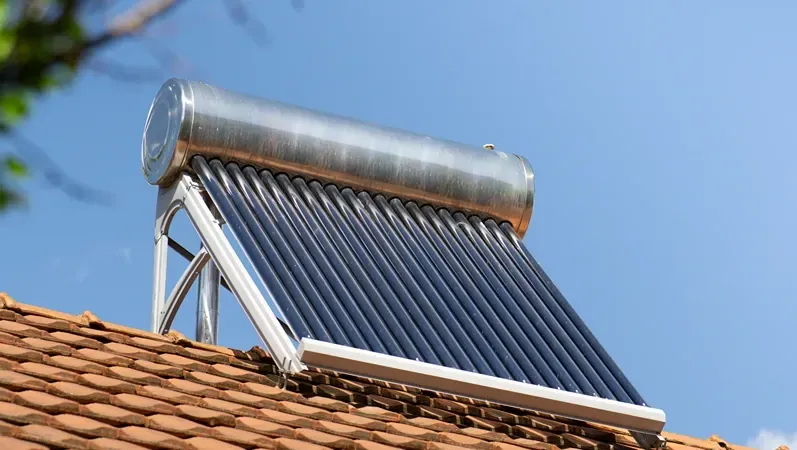
Proper sizing ensures enough hot water without overpaying.
Sizing Based on Household Size
- 1–2 people: 40–50 gal tank, 40–80 sq ft collectors.
- 3–4 people: 65–80 gal tank, 65–120 sq ft collectors.
- 5–6 people: 100–120 gal tank, 100–180 sq ft collectors.
Climate and Solar Fraction Adjustments
Northern climates require larger collector areas due to lower winter solar intensity.
Table 2: System Sizing Guide by Household & Climate
| Household Size | Tank Size | Collector Area (South) |
Collector Area (North) |
|---|---|---|---|
| 1–2 people | 40–50 gallons | 40–60 sq ft | 60–80 sq ft |
| 3–4 people | 65–80 gallons | 65–90 sq ft | 90–120 sq ft |
| 5–6 people | 100–120 gallons | 100–130 sq ft | 130–180 sq ft |
Climate Considerations: Will Solar Water Heating Work in Your Area?
Yes, but performance varies. Active systems with antifreeze work anywhere.
Minimum Sun Hours Required
At least 3–4 hours of direct sunlight for optimal daily operation.
Freeze Protection for Cold Climates
Closed-loop glycol systems prevent freezing; drain-back systems are alternative.
Seasonal Performance Expectations
Summer: 70–90% coverage. Winter: 20–40% coverage in northern climates.
Installation Process Overview
Professional installation ensures system safety and efficiency.
Site Assessment and System Design
Roof orientation, structural strength, and shading analyzed.
Installation Timeline and Process
Typically 2–5 days; includes mounting collectors, plumbing connections, and system testing.
Roof and Structural Requirements
Roof must support 40–80 sq ft of collectors and withstand local wind/snow loads.
Maintenance & Troubleshooting
Solar water heaters are low-maintenance but not maintenance-free.
Annual Maintenance Tasks
Check pumps, fluid levels, insulation, and clean collectors.
Common Issues and Solutions
Leaks, faulty controllers, and airlocks can reduce performance; simple repairs often suffice.
System Lifespan and Component Replacement
Collectors last 20+ years; pumps 10–15 years; glycol fluid replacement every 5–7 years.
Solar Water Heating Vs. Solar-Powered Home
Solar thermal directly heats water. Solar PV generates electricity for the entire home, including water heating.
Cost and Efficiency Comparison
Solar thermal: 60–75% efficient, $3K–$9K. Solar PV: 15–20% efficient for water heating, $5K–$15K. Thermal is better if hot water is primary need.
Can You Combine Solar Thermal and Solar PV?
Yes, hybrid systems allow electricity generation for home and solar water heating simultaneously. Offers flexibility, higher upfront cost, and potential max energy savings.
Solar Water Heating Is Proven, Cost-Effective Technology
Solar water heaters deliver 50–80% annual hot water savings. With proper sizing, a 20-year lifespan, and a 30% federal tax credit, they are highly affordable.
Bay Area solar expert Rajab Imtair
confirms active closed-loop systems work reliably in all climates. Homeowners can use solar calculators to estimate savings before investing.
Get a free estimate today!
References
- U.S. Department of Energy. Solar Water Heating Overview. https://www.energy.gov/energysaver/solar-water-heaters
- National Renewable Energy Laboratory. Solar Water Heating Basics. https://www.nrel.gov/research/re-solar-water-heating.html
- Energy.gov Tax Incentives for Residential Solar. https://www.energy.gov/savings/residential-renewable-energy-tax-credit
- Solar Energy Industries Association. Residential Solar Water Heating. https://www.seia.org/initiatives/residential-solar-water-heating
Frequently Asked Questions (FAQs)
Solar water heaters are a common concern. Here are answers to typical questions:
How does a solar water heating system work?
How does a solar water heater work? Sunlight is absorbed by collectors, heat-transfer fluid circulates, and heat is transferred to water via a heat exchanger. Differential controllers manage circulation.
Do solar water heaters work in winter?
Yes, active closed-loop systems with antifreeze operate in cold climates. Performance may be lower, typically 20–40% of summer capacity in northern regions.
What are the two types of solar water heating systems?
Active (pumped circulation) and passive (gravity-driven). Active works in all climates; passive is cheaper and suited for warm climates.
How long do solar water heaters last?
Collectors last 20+ years. Pumps and controllers typically 10–15 years; fluids replaced every 5–7 years.
Are solar water heaters worth it?
Yes. They reduce energy bills 50–80%, qualify for federal tax credits, and provide reliable hot water for decades.
How much does a solar water heater cost?
Typical ranges: $3,000–$9,000 before incentives. Active systems cost more than passive but work year-round.
What is the difference between active and passive solar water heaters?
Active systems use pumps and controllers; passive rely on natural convection. Active systems deliver higher efficiency and freeze protection; passive are lower-cost but limited to warm climates.