Which Direction Should Solar Panels Face
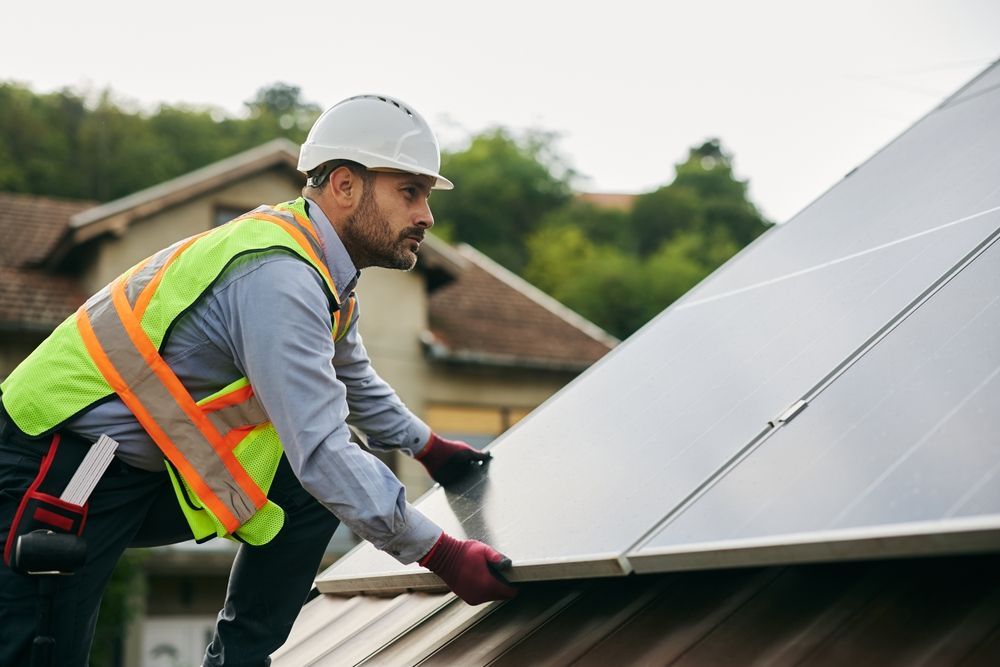
Homeowners planning a solar investment often ask: which direction should solar panels face to maximize energy production and long term savings? This complete guide explains the science, the practical methods, and the real world tradeoffs behind solar orientation so you can make a confident decision.
In short, the ideal answer depends on your hemisphere, roof structure, and utility rates. For most U.S. homeowners, especially in the Bay Area, the best direction to face solar panels is true south. That positioning typically delivers the highest annual output and strongest return on investment.
If you are asking “What direction should solar panels face for your specific property?” This guide will walk you through the data, tools, and expert considerations before you call an installer.
Which Direction Should Solar Panels Face for Maximum Energy?
In the Northern Hemisphere, including the United States, solar panels should face true south to capture the most annual sunlight. In the Southern Hemisphere, they should face true north. This orientation maximizes daily sun exposure and increases overall energy production by aligning with the sun’s path across the sky.
It is important to distinguish true south from magnetic south. A compass points toward the magnetic south, which can differ by several degrees from geographic south. That difference, known as magnetic declination, can reduce performance if not corrected.
There is flexibility. Panels positioned within 15 to 30 degrees east or west of true south still perform at 90 to 100 percent of optimal output. In some cases, southwest facing systems outperform due to utility rate structures.
Key Takeaways
- In the U.S., the best direction for solar panels to face is true south.
- True south differs from magnetic south and must be corrected.
- Southeast and southwest orientations often achieve 90 to 100 percent efficiency.
- Only north facing solar panels significantly reduce annual output.
- The direction and angle of solar panels both matter, but direction has greater impact.
Understanding Solar Panel Orientation: Azimuth and Tilt
Effective solar panel placement depends on two variables: azimuth and tilt. Together, they determine how much sunlight reaches the modules throughout the year.
What Is Azimuth Angle in Solar Panel Orientation?
Azimuth describes horizontal direction using compass degrees:
- 0 degrees = north
- 90 degrees = east
- 180 degrees = south
- 270 degrees = west
In the Northern Hemisphere, 180 degrees represents the ideal solar panel direction for maximum annual production. When evaluating panel direction, installers use this degree system rather than simple compass labels.
Proper pv panel orientation ensures sunlight strikes the panels for the longest daily duration. That is why south facing solar panels remain the benchmark for performance.
What Is Tilt Angle and Why Does It Matter?
Tilt refers to the vertical angle from horizontal. A common rule of thumb: set tilt equal to your latitude. In San Francisco, around 37 degrees works well.
Seasonal adjustments can fine tune production, but for fixed residential systems, tilt is secondary to azimuth. The real question homeowners should prioritize is which way should solar panels face.
Direction Matters More Than Angle — The Data
Research from California solar performance studies shows that south facing panels installed at a non optimal tilt can still produce up to 19 percent more energy annually than perfectly tilted panels facing the wrong direction.
This reinforces that the direction for solar panels plays a larger role than minor tilt adjustments.
How to Find True South for Your Solar Panel Installation
If you are evaluating where to install solar panels, identifying true south is critical. Here are three practical methods.
Why You Can't Use a Compass
Magnetic south differs from geographic south due to Earth’s shifting magnetic field. For example:
- Denver: about 8 degrees east
- Seattle: about 15 degrees east
- New York: about 13 degrees west
If you rely on a compass without correction, your optimal solar panel placement could be off by more than 10 degrees.
Method 1: NOAA Magnetic Declination Calculator
- Visit the NOAA Magnetic Declination Calculator.
- Enter your address.
- Note your local declination.
- Adjust your compass reading accordingly.
For example, in Los Angeles with 12 degrees east declination, you would point 12 degrees east of compass south to align with true south.
Method 2: Google Maps Satellite View
For many homeowners, this is the easiest method. This quickly answers which way should solar panels face on a roof without calculations.
- Open Google Maps.
- Switch to satellite view.
- Rotate the map so north is at the top.
- Identify the slope of your roof.
Method 3: Noon Shadow Method
At solar noon, a vertical object casts a shadow pointing true north. Solar noon is not clock noon. It varies by location.
Place a straight stick vertically and mark the shortest shadow of the day. That line indicates the north south axis.
When NOT to Face South — Exceptions and Alternative Orientations
While south is usually the best placement for solar panels, exceptions exist.
Time of Use Rates and West Facing Panels
In areas like San Diego, peak electricity pricing occurs in late afternoon. Panels installed at about 190 degrees azimuth can produce more valuable energy during peak billing hours.
Under time of use rates, southwest may be financially superior to strict south. This affects decisions about should solar panels face south or north.
East West Solar Systems — Lower Output, Better Value?
East west split systems produce around 70 percent of south facing output but spread energy production across morning and evening.
On flat commercial roofs, this configuration may represent the best location for solar panels due to space efficiency.
When Your Roof Doesn't Face South — Is Solar Still Worth It?
If your roof faces southeast or southwest, you can still achieve 90 to 100 percent of optimal output. Due east or west achieves roughly 70 to 80 percent.
Only fully north facing roofs significantly reduce performance. Even then, partial offsets may make sense in high incentive markets.
Table 1: Solar Panel Azimuth Direction: Annual Energy Output by Orientation (Northern Hemisphere)
| Azimuth Direction | Degrees from North | Annual Output vs. Optimal South | Best Use Case |
|---|---|---|---|
| True South (Optimal) | 180° | 100% (baseline) | Maximum annual energy production |
| South-Southwest | 202.5° (22.5° west) | 98–100% | Time-of-use rate optimization |
| South-Southeast | 157.5° (22.5° east) | 98–100% | Morning energy consumption priority |
| Southwest | 225° (45° west) | 90–95% | Afternoon peak demand optimization |
| Southeast | 135° (45° east) | 90–95% | Morning energy needs; shading constraints |
| Due West | 270° (90° west) | 70–80% | Afternoon/evening consumption; no south roof |
| Due East | 90° (90° east) | 70–80% | Morning consumption; no south roof available |
| North (Worst) | 0° / 360° | 50–60% | Avoid — only viable if no other option exists |
Table 2: True South vs. Magnetic South: Magnetic Declination by U.S. Region
| City / Region | Magnetic Declination | Compass Correction | True South Direction |
|---|---|---|---|
| Denver, CO | ~8° East | Point 8° east of compass south | 188° on compass = 180° true south |
| Seattle, WA | ~15° East | Point 15° east of compass south | 195° on compass = 180° true south |
| Los Angeles, CA | ~12° East | Point 12° east of compass south | 192° on compass = 180° true south |
| Phoenix, AZ | ~10° East | Point 10° east of compass south | 190° on compass = 180° true south |
| Chicago, IL | ~5° West | Point 4° west of compass south | 176° on compass = 180° true south |
| New York, NY | ~13° West | Point 13° west of compass south | 167° on compass = 180° true south |
| Miami, FL | ~8° West | Point 6° west of compass south | 174° on compass = 180° true south |
| Portland, ME | ~15° East | Point 15° west of compass south | 165° on compass = 180° true south |
Real World Example: Optimizing a San Diego Residential Installation
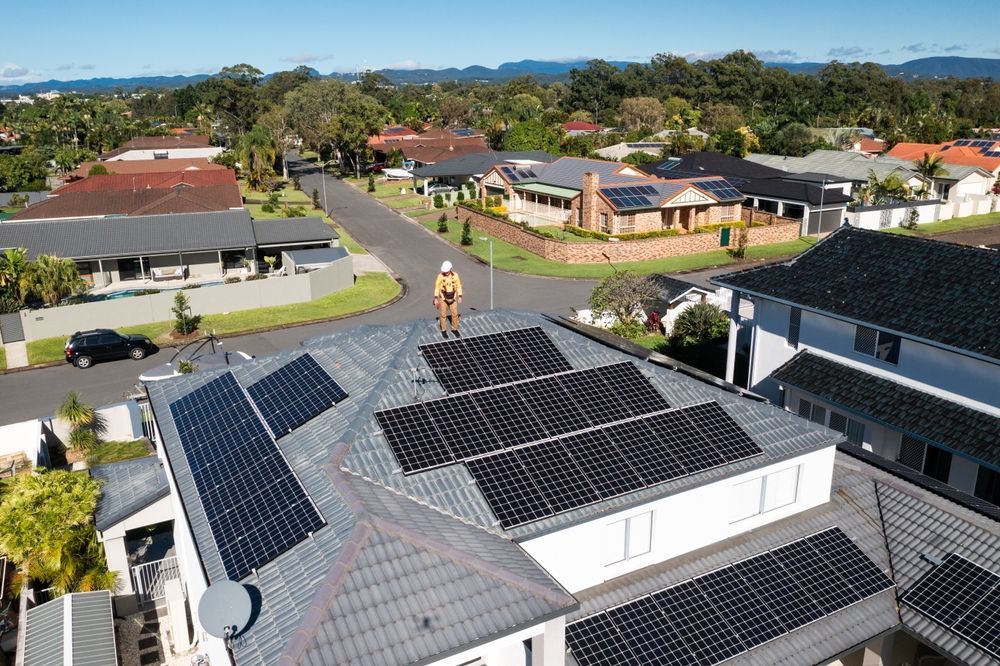
A homeowner in San Diego wanted maximum annual production. Initial design targeted 180 degrees. After reviewing time of use rates and correcting for declination, the installer recommended 190 degrees azimuth.
The slight shift increased peak hour output, improving annual bill savings. So which direction should solar panels face for maximum efficiency? This can depend on billing structure, not just sunlight exposure.
Face South, Verify True South, and Optimize for Your Situation
For most U.S. homeowners, including those in the Bay Area, the answer to what is the best direction for solar panels is true south. Verify true south, not magnetic. Acceptable ranges are wider than most people assume. If you are still evaluating which direction should solar panels face, consult a certified installer for a property specific assessment.
Companies like Rajab Imtair emphasize precision in solar panel orientation and advanced system design. When paired with premium solutions such as Tesla solar panels and the Tesla Powerwall battery, homeowners gain not only optimized production but also energy storage and resilience. Tesla systems integrate seamlessly, enhancing long term value and energy independence across the Bay Area. Get a quote today!
References
- NOAA Magnetic Declination Calculator
- U.S. Department of Energy Solar Energy Technologies Office
- Lawrence Berkeley National Laboratory Solar Studies
Frequently Asked Questions (FAQs)
Which direction should solar panels face?
In the Northern Hemisphere, they should face true south for maximum annual production. Southeast and southwest orientations still perform very well.
Do solar panels have to face south?
No. While south is optimal, east and west facing systems can still produce substantial energy, especially under time of use billing.
Can solar panels face east or west?
Yes. East or west orientations typically produce 70 to 80 percent of the output of south facing systems, which can still make financial sense.
What happens if solar panels don't face south?
Output decreases depending on orientation. Southeast or southwest remains highly efficient, while north facing installations see the largest reduction.
How do I know which direction is true south for my solar panels?
Use the NOAA declination calculator, satellite mapping tools, or the noon shadow method to identify geographic south accurately.
Is solar panel direction or angle more important?
Direction generally has a larger impact than tilt. Proper direction and angle of solar panels together maximize system performance, but azimuth alignment delivers the greatest gains.